Google Tag-

A New Way Home - Vail Valley Real Estate Blog

You’ll find our blog to be a wealth of information, covering everything from local market statistics and home values to community happenings. That’s because we care about the community and want to help you find your place in it. Please reach out if you have any questions at all. We’d love to talk with you!

May 27, 2026

Unhinged Bio for Heidi

Chat GPT just created this "unhinged bio for me."  Do you think it's accurate?

Heidi Trueblood is not your average realtor—she’s a market-watching, deal-structuring, ski-boot-wearing force of nature who treats real estate like a full-contact sport and a chess match at the same time.


By day, she’s analyzing Beaver Creek pricing trends like a Wall Street quant trapped in a mountain town. By night, she’s probably rewriting your perception of what “fair market value” even means—while casually texting you back faster than your closest friends. Inventory tight? She already knows. Seller hesitant? She’s already three steps into a strategy that makes them reconsider their life choices.


She doesn’t “show homes.” She reverse-engineers lifestyles. She doesn’t “list properties.” She positions assets with the precision of someone who has zero interest in wasting time, yours or hers. If there’s a detail to manage, she’s on it. If there’s a problem, it’s already halfway solved before you even know it exists.


Some say she knows Eagle County better than Google Maps. Others suspect she can sense an overpriced listing from 10 miles away. All agree: if you’re buying or selling in the Vail Valley and you don’t have her on your side, you’re basically negotiating with one ski pole.


Equal parts strategist, negotiator, therapist, and mountain-town insider, Heidi doesn’t just help people buy and sell homes—she quietly dominates the process while making it look effortless.


Proceed accordingly.

Posted in Buyer
May 27, 2026

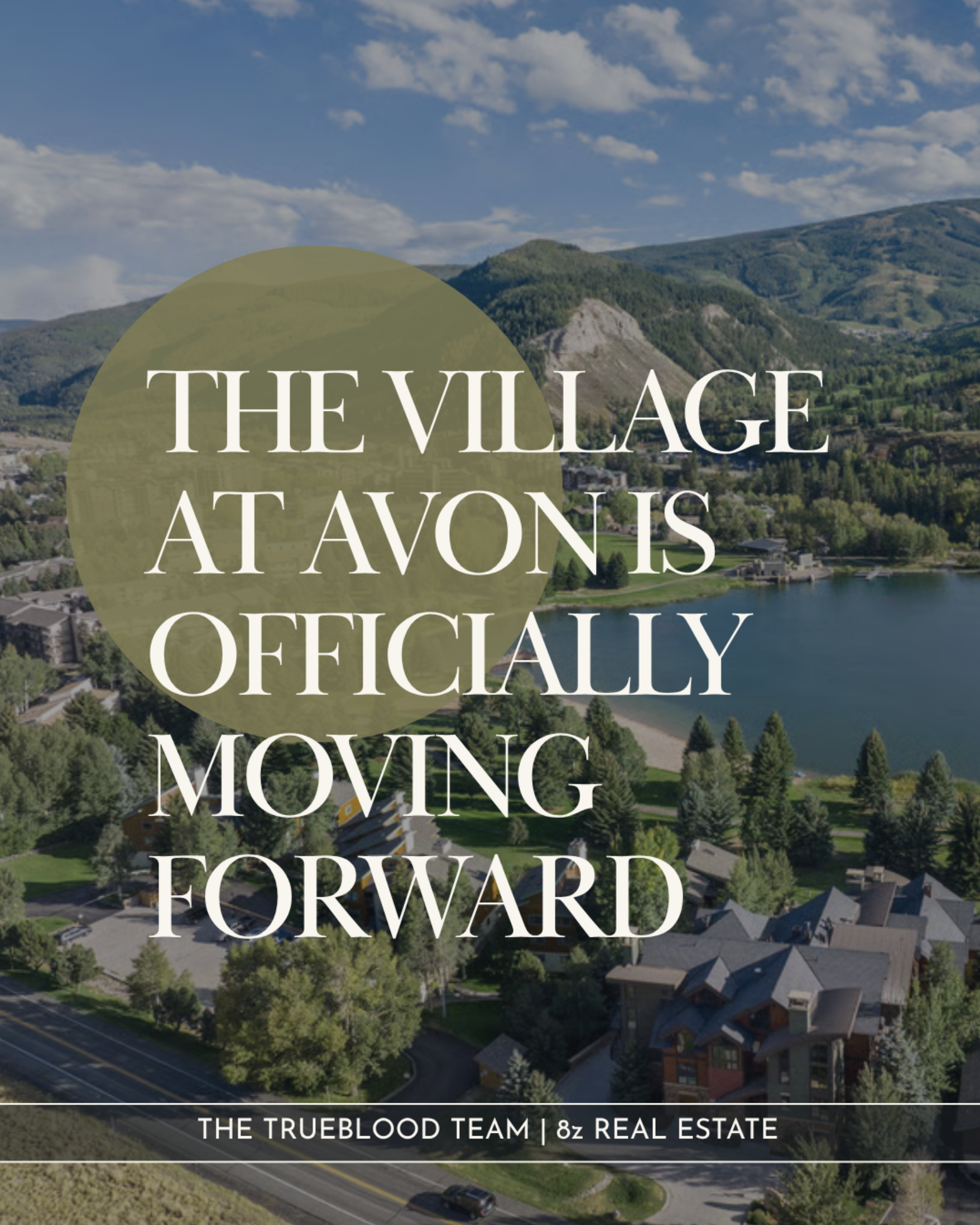
The Village at Avon is Officially Moving Forward

Big news for Avon: Phase I of the Village at Avon is officially moving forward, with a summer 2026 groundbreaking now in sight.

The first phase, planned for the northeast corner of Beaver Creek Boulevard and Chapel Place, includes a new Whole Foods, Skjól luxury condominiums, and additional retail space.

This is part of the larger Village at Avon district, which has been in the works for years and continues to take shape with housing, hospitality, and community-focused development already underway.

A few of the other projects in motion there include Buffalo Ridge, Piedmont Apartments, Bosk Apartments, the dual-brand Marriott, and the Vail Valley Foundation’s early childhood education center.

For locals, this is one of those developments worth paying attention to. It’s a meaningful piece of Avon’s continued growth — and likely one of the most watched projects in the Valley over the next few years.

What are your thoughts on the Village at Avon taking shape?


Posted in Market Updates
May 27, 2026

Why List at Market Value?

Most homeowners focus on the list price. What often gets overlooked is the window of time right after a property hits the market. That early window matters.

We’ve seen it happen more than once: a beautiful home comes on just a bit too high, sits longer than expected, and suddenly the conversation shifts. Instead of, “Is this the one?”  buyers start asking, “Why has it been sitting?”


The house did not change. The perception did. And in this market, perception matters. That is why we tell sellers the same thing.

Your first few weeks on the market are one of your strongest negotiating tools. Stronger than chasing the market later. Stronger than explaining a price reduction after the fact.

And once that window passes, you do not really get it back.


If selling is on your mind this year, we’d be happy to talk through what a strong launch strategy looks like in the Vail Valley.


Posted in Home Seller Tips
May 4, 2026

Colorado's Vail Valley Homes Are Sitting Longer — Here's What's Really Happening

Written by:

Steve Marcinuk

Date:

04 May 2026


Vail Valley’s real estate market has cooled, not crashed, but the cracks are showing. After years of frenzied pandemic buying that sent home prices soaring and inventory plummeting, Eagle County is now a market where homes sit, buyers walk, and the short-term rental income that sold so many on ownership is quietly falling short of expectations.


Heidi Trueblood, Managing Broker and Team Lead at The Trueblood Team with 8z Real Estate, who has worked the Vail Valley market since 2004, breaks down what’s actually happening across Eagle County. Buyers have stopped rushing, deals are collapsing more often, and the workforce holding the valley together is getting priced out fast.


Buyers Are Done Rushing

The buyers coming into Vail Valley today are not in a hurry. More than half of all purchases are completed in cash, which means no mortgage deadlines, no rate anxiety, and no pressure to move fast. These are mostly second-home buyers from major U.S. cities who fly in on direct flights from New York, Chicago, Houston, and Los Angeles. They are shopping for a lifestyle, not a necessity, and that changes everything about how they behave in a negotiation.


That patience is now working against sellers. Properties that would have moved quickly three years ago are now sitting if they are not priced correctly or properly prepared. Buyers are looking for homes that are genuinely ready and are willing to wait for the right one. Sellers who assume demand will cover up deferred maintenance or an aggressive price are finding out this market no longer works that way.


500 Listings, Zero Relief

Before the pandemic, Vail Valley typically had around 1,000 active listings at any given time. That number collapsed during the COVID buying surge and has only partially recovered, with inventory now at just above 500 homes, its seasonal low. Late February is historically the weakest period for listings because ski season keeps owners in residence or their properties rented out, off the market.


The shortage will not be solved by new construction. Vail and Beaver Creek sit within a narrow mountain corridor with almost no room to build, and the surrounding communities offer no affordable alternatives, as they carry their own resort pricing and supply problems. Until more owners decide to sell, buyers will keep competing over a pool of homes that falls well short of what this market looked like five years ago.


Deals Die at Inspection

Transaction volume has remained relatively steady, but more deals are falling apart before closing. The breaking point is almost always the inspection, where repair requests and concession lists have grown longer and more specific. Sellers are often caught off guard by how much buyers now expect to negotiate after an offer is accepted.


The tension is not just about money but about what each side thinks is reasonable. Buyers expect a move-in-ready home even at resort prices, while sellers believe they have already priced in the property’s condition. Neither side is entirely wrong, and that standoff is where deals are dying. Agents are spending more time managing expectations on both ends just to keep transactions alive.


Short-Term Rentals Lied to You

The pitch was simple: buy in Vail, rent it out when you are not there, and let the property pay for itself. That math has never been clean, and it is getting harder to ignore. Cash buyers might cover their monthly costs through rental income, but anyone carrying a mortgage is unlikely to break even. The numbers used to sell buyers on investment potential are often best-case scenarios rather than realistic ones.


Regulation has made ownership even more complicated. Every town in Eagle County plays by different rules: Vail requires a licensed property manager within 60 miles, Avon has capped short-term rental participation at 15 percent per HOA in certain areas, and Beaver Creek operates under its own county-level structure with an evolving tax setup. Licenses do not transfer between sellers and buyers, which affects how properties get valued. Outside Vail Village and Beaver Creek proper, occupancy rates have also dropped as rental supply has grown without a matching increase in visitors.


Workers Leave, Resort Crumbles

A single-family home in Edwards, one of the more accessible mid-valley communities, now sells for around $2 million, compared to roughly $800,000 before the pandemic. The people who cook in restaurants, staff medical clinics, and keep the resort running day-to-day cannot afford to live anywhere near where they work, and that gap is now wide enough to threaten how the valley functions.


When service workers cannot afford to live in a community, they leave. When they leave, restaurants close earlier, wait times grow longer, and the experience that wealthy buyers pay a premium for starts to fall apart. If the valley loses the people who make it livable, the buyers paying millions for a home there will have less and less reason to show up. The resort market’s biggest long-term risk is not a drop in demand at the top. It is the collapse of everything underneath it.


About the Expert: Heidi Trueblood is managing broker and team lead at The Trueblood Team, 8z Real Estate, based in Eagle County, Colorado. Her practice covers residential real estate across the Vail Valley market, including Vail, Beaver Creek, Edwards, and surrounding communities in the Eagle County resort corridor.


This article is based on information provided by the expert source cited above. It is intended for general informational purposes only and does not constitute legal, financial, or real estate advice. Readers should conduct their own research and consult qualified professionals before making any real estate or financial decisions.

Posted in Market Updates
March 12, 2026

High-end homes sales in Vail area seem insulated so far from external market factors News | Mar 11, 2026


Taking a snapshot of the Vail MLS at the end of February, statistics show both the high end of the Eagle River Valley real estate market ($5 million and up) and the lower end (under $1 million) held up remarkably well in terms of sales despite record low snowfall totals this season.

Joanna Hopkins of Slifer Smith & Frampton Real Estate last week attended the Luxury Summit for Leading RE in Las Vegas, a confab of independent brokerages from around the world (SS&F is the largest independent brokerage in Colorado).


“For the Vail market, (high end) is $5 million and up, and the luxury market is holding very, very strong, both here and across the country,” Hopkins said in phone interview Wednesday. “Those price points vary, of course, by market.


“But these buyers are still insulated from all of the external factors — economy, war, interest rates, all of the noise,” Hopkins added. “They’re insulated from all of those factors and still focused on family and creating, not necessarily the actual home, but buying in a place that they love and can bring their family together.”


MLS (multiple listing service) numbers for February in Eagle County back up that assertion.


There were 144 luxury homes on the local market this past February compared to 108 in February of 2025, according to Heidi Trueblood of The Trueblood Team and 8z Real Estate. Seven of those homes went under contract this year compared to nine last year, with the average days on market much lower for the high end this year (152) compared to 249 last year.


“From our perspective, it has felt like the activity in the market has been really solid this ski season despite the snow, or lack thereof,” Trueblood wrote in an email last week. “Out-of-state vacationers are still coming, but they aren’t skiing as long each day. So then they are doing other activities like eating, drinking, shopping, working out, and this includes house hunting.


“I suspect the feeling that people aren’t buying is more related to increased inventory, especially above $5 million,” Trueblood added. “Since there is more supply, buyers are eliminating properties before they even set foot in them.”


Some brokers have said fewer skiers in Vail (Vail Resorts’ ski areas across the West are down about 12% through February due to low snowfall) has translated to fewer real estate showings and in some cases fewer transactions as potential buyers have sought out other markets with more snow or just opted to head to the beach.


“We’re calling it the patient market,” Hopkins said. “We have patient sellers and we have patient buyers. Patient sellers don’t have to sell, and patient buyers don’t have to buy.”


Hopkins expects things to pick up again with pent-up demand as an early spring gives way to summer in the Colorado High Country.

“Locally, while luxury has been strong, I think summer is going to be where we’re going to catch up with visitation and more transactions,” Hopkins said. “We’re just hoping that (Colorado) summer is still a prime destination for people from the hotter climates like Texas and Florida. That shouldn’t change.”


While homes on the high end, in February at least, were spending less time on the market this ski season, the opposite was true under $1 million, where there were 118 homes at that price point for sale this February, compared to 112 last February. Twenty-seven of them went under contract this February, compared to 22 last February, with the average number of days on the market at 103 this February compared to just 62 last February.


Hopkins said sales of lower-priced, attainable homes under $1 million were also hanging in there despite the lack of snowfall and decline in visitation.


“Well, at the entry level, the two largest new development projects, Timber Ridge Village (multi-family housing in Vail) and Siena Lake near the airport in Gypsum, are offering entry-level opportunities and people can choose whether they want a single-family home and drive a little further to work (or be closer in Vail),” Hopkins said.


“There are interest rate buy-down options that are being thrown out as an incentive and are almost a necessity for new first-time homebuyers in this market,” Hopkins added. “If you can assemble a few of these options together, it makes homeownership much more attainable. Local transactions are still about half of our county-wide transactions.”


Overall, in the month of February, things were about even year over year despite poor snow conditions and a lagging economy due to fewer visitors. There were 513 homes in all price points for sale this February, with 74 of them going under contract, compared to 466 such homes in February of 2025, with 73 of them going under contract. So pretty much right on track, although Trueblood said there’s one scenario in which that could change.


“With all of this being said, it seems like people believe the snow this year is just unusual,” Trueblood said. “However, if it happens again next year, I’m certain the market will be impacted far more.”

Posted in Market Updates
Oct. 10, 2025

How to Choose the Right Realtor in 2025

Why Choosing the Right Realtor Matters More Than Ever

In 2025, the real estate market continues to evolve — with higher inventory levels, interest rate shifts, and nationwide buyers exploring Eagle County. Whether you’re listing your home in Beaver Creek or searching for your next mountain property in Edwards, the most important decision you’ll make is choosing the right realtor.

→ View Current Market Reports


1. Local Knowledge You Can’t Google

Your realtor should live and breathe the Vail Valley lifestyle — from snow days on the slopes to mountain-bike races and summer concerts at The Amp.
The best agents understand HOA nuances, metro district fees, and the differences between communities like Homestead, EagleVail, and Singletree.

Ask your agent about:

  • Neighborhood trends, HOA dues, and metro district assessments

  • Involvement in local boards, schools, and community events

  • Knowledge of zoning, rental rules, and short-term rental regulations

→ Meet the Trueblood Team


2. Data-Driven Decisions

Pricing your home or finding the right offer price isn’t guesswork — it’s analysis. Top realtors use live MLS data, price-per-square-foot trends, and supply-and-demand ratios to guide smart decisions.

Your agent should show you:

  • Year-over-year and YTD stats by neighborhood

  • Buyer traffic patterns and feedback reports

  • How your property compares to current competition

→ Request a Free Home Value Estimate


3. Modern Marketing That Works

Today’s buyers are everywhere — Denver, Texas, California, New York — and most find homes online first. Your realtor needs to be more than a salesperson; they need to be a storyteller and digital marketer.

At The Trueblood Team, that means:

  • Professional photography, drone video, and cinematic tours

  • Targeted digital advertising reaching high-intent buyers nationwide

  • Authentic social-media storytelling highlighting lifestyle, not just listings

→ See Our Featured Listings


4. Skilled Negotiation & Smooth Closings

The right agent protects your position — whether negotiating multiple offers or inspection credits that actually close.

Ask your agent about:

  • Strategy for managing competing offers

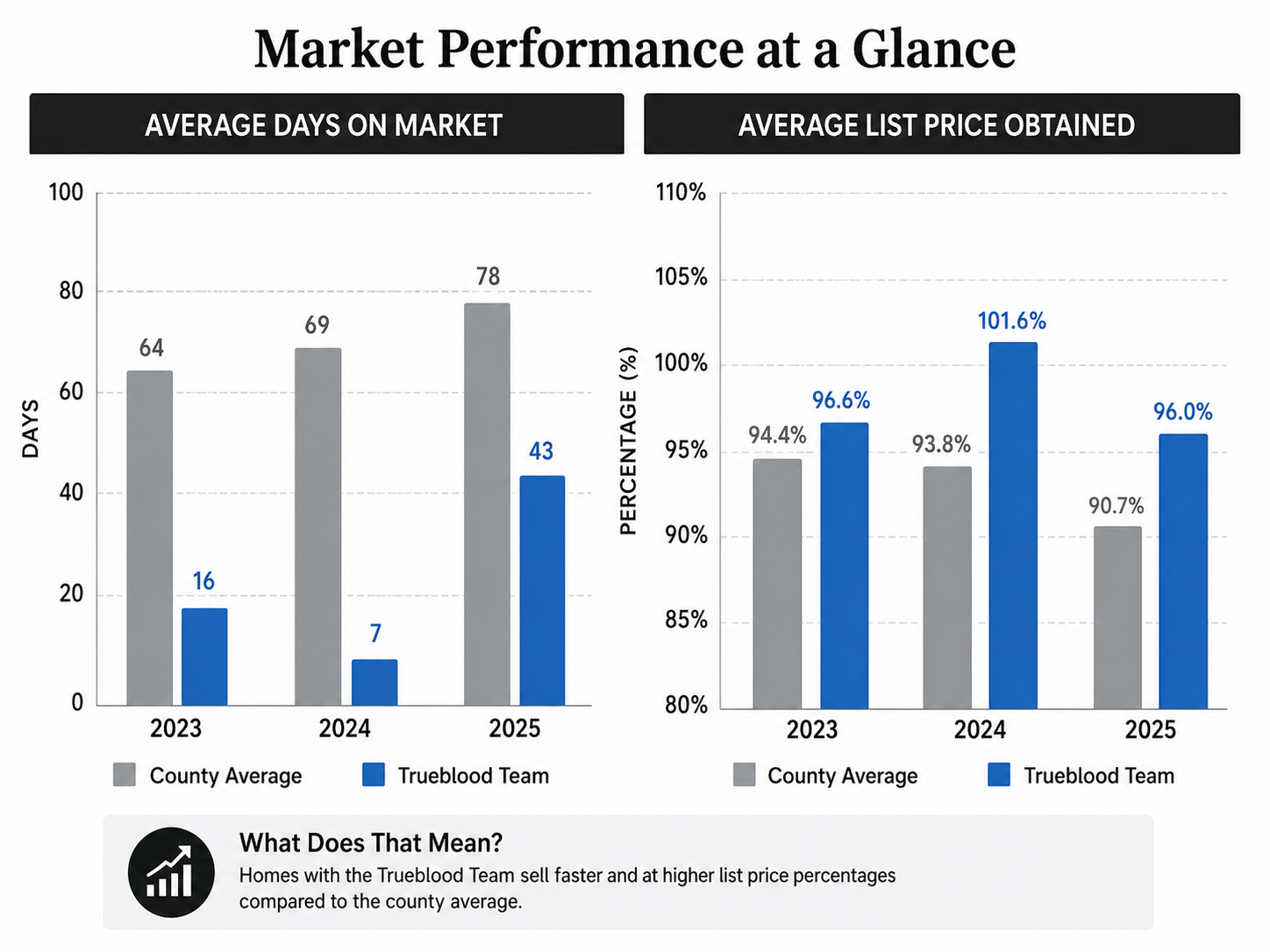
  • Average days on market vs. area average

  • Coordination with lenders, inspectors, and title companies


5. Communication That Builds Confidence

Real estate is personal. You deserve a realtor who listens, responds quickly, and makes you feel informed every step of the way.

Ask yourself:

  • Do they understand your goals?

  • Are they transparent about market realities?

  • Do you feel comfortable discussing major financial decisions with them?


6. Reputation You Can Trust

In Eagle County, reputation is everything. The Trueblood Team has built lasting relationships through integrity, market expertise, and deep community roots — serving clients from Vail and Beaver Creek to Edwards, Eagle Ranch, and beyond.

→ Read Client Reviews


The Bottom Line

Choosing the right realtor in 2025 means finding a partner who brings insight, strategy, and heart to every transaction.
If you’re considering buying or selling in Vail, Beaver Creek, Edwards, or Eagle, let Mike & Heidi Trueblood guide you with proven local expertise and results that speak for themselves.

Posted in Buyer, Market Updates
July 28, 2025

Capital Gains Reform for Homeowners Gains Ground in Congress

Capital Gains Reform for Homeowners Gains Ground in Congress


Big changes could be coming for homeowners who’ve seen their home values soar. Here’s what you need to know—and why it matters for anyone thinking about selling.

For the first time in nearly three decades, there’s serious momentum in Washington to reform the capital gains tax exclusion on home sales—a long-overdue update that could unlock more inventory in a tight housing market.

Currently, homeowners can exclude up to $250,000 (or $500,000 for married couples) in gains from the sale of their primary residence. That cap was set all the way back in 1997, and it hasn't budged since—despite home prices more than tripling in that time.


Why This Matters for You

If you've owned your home for at least 5 years, there's a good chance that your equity has grown well beyond those outdated thresholds. But selling could mean a hefty capital gains tax bill, even for middle-class homeowners. That’s led many long-time owners—especially retirees—to stay put, creating what economists call a “lock-in effect.”

In short: People who want to move aren't doing it, because the tax consequences are just too steep.


What’s Happening Now

Two bills are making headlines:

  • The More Homes on the Market Act (introduced by Reps. Jimmy Panetta and Mike Kelly) would double the current capital gains exclusion and index it to inflation going forward.
  • The No Tax on Home Sales Act (introduced by Rep. Marjorie Taylor Greene) goes even further—proposing to eliminate capital gains taxes on primary residences entirely.

Even President Trump recently weighed in, stating: “We are thinking about no tax on capital gains on houses.”

With bipartisan backing and pressure from advocacy groups like the National Association of REALTORS® (NAR), this is shaping up to be a rare moment of consensus in Congress.


Who’s Affected?

According to NAR, 34% of current homeowners are already at risk of exceeding the $250,000/$500,000 limit—and that number could rise to nearly 70% by 2035 if nothing changes. This includes many retirees who’ve built up equity over decades and are relying on that wealth for their next chapter.


As NAR Chief Economist Lawrence Yun points out, homeownership is one of the primary ways middle-class Americans build generational wealth. In fact, home equity and retirement savings make up over 60% of household net worth, according to the U.S. Census Bureau.


What’s Next?

The growing bipartisan support—and high-profile attention—means change could finally be on the horizon. Whether lawmakers choose to raise the exclusion limit, index it for inflation, or eliminate the tax altogether, reform could bring relief to millions of homeowners and help increase housing supply across the country.


Bottom Line

If you’ve been holding off on selling your home because of capital gains taxes, keep an eye on these developments. The real estate landscape may soon shift in your favor—and we’ll be here to help you navigate it every step of the way.

Want to know how these proposed changes could impact your specific situation? Let’s talk. Reach out today for a personalized home value report and strategic guidance on your next move.


Posted in Home Seller Tips
May 12, 2025

How do Tariffs Impact Housing?


What Do Tariffs Have to Do With Colorado Real Estate? More Than You Might Think.


If you’ve been keeping an eye on economic headlines lately, you’ve probably seen the word “tariffs” pop up—maybe in connection with U.S.-China trade policy, new proposals in an election year, or rising consumer prices. At first glance, this might feel like a Washington D.C. problem, far removed from home buying or selling here in Colorado. But like many things in economics, the effects of trade policy can ripple outward in ways that eventually touch your wallet—and even your real estate goals.

Let’s explore how tariffs can influence housing prices, mortgage rates, construction costs, and ultimately, how much you’ll pay for a home or walk away with as a seller.


What Are Tariffs, Really?

A tariff is essentially a tax imposed on products coming into the country. They’re usually designed to protect domestic industries or to create leverage in trade negotiations. But while the goal might be national self-reliance or improved global standing, the immediate effect is usually that imported goods become more expensive. And those price increases don’t just hit corporations—they often get passed on to everyday consumers and small businesses.

This becomes especially relevant in real estate, where the cost of goods—particularly construction materials—plays a significant role in the supply side of the housing market.


The Hidden Cost Behind New Construction

One of the most direct ways tariffs show up in real estate is through higher costs for building materials. Many homes in Colorado rely on products like Canadian softwood lumber, Chinese steel, or European-manufactured appliances. When tariffs are applied to these items, the prices go up—sometimes substantially.


Builders, already operating on tight margins and dealing with labor shortages, may respond in several ways: they might delay or cancel new developments, scale back the size or quality of projects, or pass the additional costs on to buyers. This ultimately results in fewer affordable new homes entering the market and can exacerbate inventory shortages.


In places like Eagle County, where land costs are already high, these added expenses can push even mid-range new builds out of reach for many buyers. And when new construction slows, it puts more pressure on the resale market, increasing competition for existing homes and driving prices higher.


Mortgage Rates and the Inflation Connection

But tariffs don’t just affect the cost of lumber or drywall. They can also influence monetary policy and, by extension, mortgage rates. 

Here’s how:

When tariffs raise the cost of goods across the board—everything from imported electronics to auto parts—overall inflation tends to rise. In response, the Federal Reserve may step in to cool things down by raising interest rates. While the Fed doesn’t control mortgage rates directly, its actions strongly influence them. The result? Higher borrowing costs for buyers.


Even a small increase in interest rates can have a big impact. A rise from 6.5% to 7.5%, for example, can reduce a buyer’s purchasing power by tens of thousands of dollars. That might mean having to compromise on location, size, or features—or deciding to wait altogether. For sellers, this shift can mean fewer offers or longer days on market, especially if a listing isn’t competitively priced.


Economic Uncertainty and Buyer Psychology

Trade policy also has more subtle effects. Tariffs can lead to retaliatory measures from other countries, dampen international demand for American exports, and contribute to broader economic uncertainty. When businesses are uncertain, they tend to slow hiring and investment. When consumers are uncertain, they tend to pull back on large financial decisions—including buying or selling a home.


We’ve seen examples of this in the past. During the 2018–2020 trade tensions between the U.S. and China, many sectors—especially manufacturing and agriculture—faced real strain. While the overall economy didn’t fall into recession, growth slowed, and consumer sentiment wavered. When confidence is shaky, so is the housing market.

In Colorado, this can show up in hyper-local ways. A slowdown in tech hiring in Boulder or fewer construction jobs in the Denver metro could lead to softer demand in those neighborhoods—even if broader market conditions remain healthy.


What Does This Mean for You?

For buyers, it’s worth paying attention to how economic policies might affect your borrowing power or the availability of affordable new homes. If mortgage rates are climbing due to inflation triggered in part by tariffs, locking in sooner rather than later might make sense—especially if you’ve already found the right home.


For sellers, staying competitive in pricing and presentation becomes even more important in an uncertain economic climate. A well-prepared, move-in-ready listing that’s aligned with current market expectations is more likely to attract serious, qualified buyers—especially if affordability is tightening.


If you’re wondering how larger economic trends might impact your home buying or selling strategy in today’s market, I’d be happy to walk through it with you. Whether it’s timing your next purchase, preparing your home to sell, or just understanding where things are heading—let’s talk.


Posted in Buyer, Market Updates
May 5, 2025

Did you get your Property Tax Statement

What Eagle County Property Owners Should Know About the Notice of Valuation and Property Taxes

If you own real estate in Eagle County, you likely received a Notice of Valuation (NOV) from the County Assessor’s Office this May. While it might look like routine paperwork, this notice plays a major role in determining your property tax bill. Here's what it means—and what to do next.


What Is the Notice of Valuation?

The Notice of Valuation is issued by the Eagle County Assessor’s Office every two years, in May of each odd-numbered year. It provides the county’s estimated market value of your property as of June 30 of the previous year—this time, June 30, 2024.

This valuation is used to calculate your property taxes, so it's worth a close review.


What's Included in the NOV?

Your Eagle County NOV will include:

  • Your property’s location and classification
  • The prior and current actual value estimates
  • The assessed value used for tax purposes
  • A list of taxing districts that impact your bill
  • Any exemptions applied to your property
  • Instructions for how to appeal


Why It Matters

An increase in your assessed value can result in a larger tax bill. While Eagle County and the State of Colorado may adjust mill levies to offset rapid appreciation, a significantly inflated valuation can still lead to overpayment if it's based on incorrect or outdated property data.


How to Appeal Your Property Valuation in Eagle County

If you believe your property has been overvalued, you have the right to appeal. Here's how:

  1. Review recent sales of comparable properties in your area (ideally from July 1, 2023, to June 30, 2024—the data period used by the county).
  2. Submit your appeal by June 8, either online, by mail, or in person to the Eagle County Assessor’s Office.
  3. Include supporting documents, such as photos, MLS data, or recent appraisals.
  4. Be prepared to attend a hearing if needed.

You can start the appeal process directly on the Eagle County Assessor’s website.


Colorado-Specific Factors to Keep in Mind

  • Assessment Rate: For residential properties, only a percentage of the actual value is used to calculate taxes. That percentage can change based on state legislation.
  • Senior Exemption: If you’re over 65 and have owned your primary residence for at least 10 years, you may qualify for the Senior Homestead Exemption.
  • Mill Levy Changes: Mill levies are set by local taxing authorities (schools, fire districts, towns, etc.), and they can fluctuate based on budget needs.


Final Thoughts from the Trueblood Team

If you're feeling overwhelmed by your NOV—or wondering if your valuation is accurate—you’re not alone. Many homeowners across Eagle County are seeing increases again this year.  As local real estate experts, we’re happy to help you analyze comparable sales, understand your notice, or guide you through the appeal process if needed. Don’t hesitate to reach out. Let us know if you’d like a custom CMA or second opinion on your assessed value—we’re here to help.


Want to make sure you're not overpaying on property taxes?
Contact the Trueblood Team for a complimentary property value review.

Posted in Home Seller Tips
April 15, 2025

Overpricing your home could cost you more than you think...


Overpricing Your Home Could Cost You More Than You Think…


When it comes time to sell your home, it’s natural to want to get top dollar. But here's the truth: overpricing your home can end up costing you more than you expect.


Data shows the longer a house sits on the market, the less it ultimately sells for. And here’s why:


Homes that are priced at—or even just below—market value tend to attract more interest right away and often sell quickly.


On the flip side, homes that are priced too high tend to linger on the market. Buyers and agents start to wonder, “What’s wrong with it?”

As the days turn into weeks (or months), sellers are often forced to make price reductions or accept lower offers just to get buyers back to the table. Not only is that frustrating, but it also means you could be walking away with less than if you'd priced it right from the start.


This isn’t the experience you want—or deserve.


If you're thinking about selling, let’s talk. I’d love to walk you through our time-tested pricing strategy that helps sellers get the best results without the stress. The right price attracts the right buyer—fast.


Reach out anytime. Let’s get your home sold with confidence!

Posted in Home Seller Tips